
Views: 0 Author: Site Editor Publish Time: 2026-08-10 Origin: Site


Selecting the right core material for controlled environments carries high stakes. Panel failure compromises facility certification, product viability, and personnel safety. Facility managers and engineers face a distinct challenge during the design phase. You must balance stringent regulatory compliance, including ISO standards and GMP fire safety mandates, with operational efficiency and structural limitations. Upfront capital expenditure also dictates material selection, forcing teams to evaluate long-term durability against immediate budget constraints. Within the broader matrix of cleanroom construction materials, specific solutions emerge to address these rigorous demands. We will objectively evaluate when to specify rock wool over alternative core technologies to ensure your facility meets both safety codes and operational requirements. We draw on years of on-site construction experience to break down the exact performance metrics you need. You will see exactly how these materials behave under real-world stress, negative pressure, and strict sanitation protocols.
Rock wool provides A1 non-combustible fire resistance, establishing it as the baseline specification for high-risk pharmaceutical, chemical, and biotech manufacturing cleanrooms.
While delivering superior thermal stability and acoustic insulation that improves employee ergonomics, rock wool cores require rigorous edge-sealing and moisture control strategies to prevent structural degradation.
Comparing rock wool to aluminum honeycomb cleanroom panels and magnesium sulfate cleanroom panels reveals necessary trade-offs regarding panel weight, load-bearing capacity, and environmental moisture tolerance.
Total cost of ownership (TCO) for rock wool panels must factor in specialized installation handling due to increased weight compared to EPS or PU alternatives, balanced against long-term sustainability and ESG benefits.
Baseline fire rating requirements dictate the design and material selection of high-risk controlled environments. Facilities must meet stringent FM approvals, ASTM E84, and EN 13501-1 standards to operate legally. These benchmarks ensure wall and ceiling materials resist ignition and limit flame spread during a thermal event. Core materials directly impact ISO classification maintenance and GMP compliance across all operational phases. Combustible cores jeopardize safety protocols and risk catastrophic facility loss. Regulators heavily scrutinize panel composition during initial certification audits and routine inspections. Non-compliant materials lead to failed inspections, forced shutdowns, and extensive remediation projects. You must prioritize life safety metrics before evaluating thermal or acoustic performance. We see many projects fail commissioning because the design team specified a cheaper, combustible core. Inspectors will pull the material data sheets. They will check the exact fire rating of the core, the adhesive, and the facing. If the assembly fails the ASTM E84 flame spread index, you tear it down.
During an ASTM E84 test, technicians place the panel in a Steiner Tunnel. They expose it to a controlled gas flame to measure how far and how fast the fire spreads across the surface. Rock wool consistently scores a zero on the flame spread index. This means the fire does not travel across the panel face. The smoke developed index also registers at zero. This lack of smoke generation is mandatory for safety. In a sealed cleanroom environment, heavy smoke blinds personnel and clogs the HEPA filtration system instantly. When you design a facility for API manufacturing, the local fire marshal will demand these specific test results before approving the building permits.
Thermal stability remains necessary to reduce HVAC energy loads in large-scale cleanrooms. Fluctuating internal temperatures strain air handling systems and drastically increase operational expenses. Consistent thermal resistance maintains strict environmental baselines required for sensitive manufacturing processes. Facility engineers must establish acceptable thresholds for particulate shedding before finalizing material schedules. Outgassing from panel facings and adhesives introduces airborne contaminants that ruin microelectronics and sterile compounds. Microbial resistance is equally necessary in pharmaceutical and biotech zones. Wall surfaces must withstand harsh chemical cleaning agents and vaporized hydrogen peroxide (VHP) decontamination without degrading or blistering.
Cleanrooms operate under strict positive or negative pressure gradients. These pressure differentials force air through any available gap. If your panel joints fail, you lose environmental control. The HVAC system then works overtime to compensate for the pressure drop, driving up energy costs. Furthermore, the core material must not contribute to the particulate load. We test panel facings for outgassing using gas chromatography. Synthetic adhesives can release volatile organic compounds (VOCs) for months after installation. These VOCs condense on silicon wafers or contaminate sterile biological batches. You must specify low-VOC adhesives and ensure the steel facings are completely sealed.
To ensure environmental stability, follow these field-tested verification steps:
Review the outgassing test reports for the specific polyurethane or epoxy adhesive used in the panel assembly.
Calculate the required R-value based on the temperature differential between the cleanroom and the adjacent interstitial space.
Verify the chemical compatibility of the steel facing with your facility's standard cleaning agents.
Inspect the panel joints for proper silicone sealant adhesion to prevent air leaks under positive pressure.
Basalt-derived rock wool possesses physical properties that secure its A1 fire rating under international testing standards. The mineral fibers withstand extreme temperatures exceeding 1000 degrees Celsius without melting, shrinking, or igniting. This dense composition acts as a robust fire barrier between high-risk manufacturing zones. It delays flame spread across facility corridors and mechanical spaces. This delay provides necessary evacuation time in pharmaceutical and chemical applications where volatile solvents are present. Emergency responders gain valuable minutes to contain localized incidents before they breach adjacent compartments. The non-combustible nature prevents toxic smoke generation. Smoke inhalation causes the most injuries during industrial thermal events. We always specify A1 cores for rooms handling flammable liquids. The peace of mind outweighs any installation challenges.
The manufacturing process of rock wool involves melting basalt rock and chalk at temperatures around 1600 degrees Celsius. The molten rock is spun into fine fibers and bound together. This inorganic origin is why the material cannot burn. When a fire breaks out in a chemical mixing room, the temperature can spike to 800 degrees within minutes. A standard polyurethane panel will melt, release toxic cyanide gas, and collapse. A rock wool panel will hold its structural integrity. The steel facing might warp under the intense heat, but the core will block the flames from reaching the adjacent corridor. This containment strategy is the foundation of modern cleanroom fire safety design.
Fire Performance Standards Overview
Standard | Testing Focus | Rock Wool Performance |
|---|---|---|
EN 13501-1 | Reaction to fire, smoke production, flaming droplets | Class A1 (Non-combustible, no smoke, no droplets) |
ASTM E84 | Surface burning characteristics (flame spread, smoke developed) | Flame Spread Index 0, Smoke Developed Index 0 |
FM 4880 | Large-scale fire testing for insulated building panels | Passes Class 1 requirements for unrestricted indoor use |
High-density rock wool cores deliver exceptional R-values and low thermal conductivity metrics. These properties stabilize internal temperatures against external environmental fluctuations and adjacent non-conditioned spaces. Beyond thermal control, the material offers significant acoustic dampening benefits. The Noise Reduction Coefficient (NRC) is notably high compared to hollow or synthetic cores. Facilities housing loud manufacturing equipment, stamping presses, or heavy HVAC systems benefit immensely from this sound absorption. Superior sound insulation directly improves employee productivity and overall occupational health. It reduces occupational fatigue in high-noise environments. Workers maintain sharper focus, reducing the likelihood of human error during complex assembly tasks.
Let's look at the thermal dynamics. A 100mm rock wool panel provides an R-value that significantly reduces heat transfer. If your cleanroom operates at a strict 20 degrees Celsius, and the warehouse outside the cleanroom fluctuates between 10 and 35 degrees throughout the year, the panel must resist that thermal load. Poor insulation forces the cleanroom chillers and heaters to cycle constantly. This constant cycling shortens the lifespan of your mechanical equipment. On the acoustic side, the fibrous structure of rock wool traps sound waves. When sound energy hits the panel, the fibers vibrate slightly, converting the acoustic energy into trace amounts of heat. This prevents the sound from bouncing back into the room. In a facility with multiple vacuum pumps and air handlers running simultaneously, reducing the reverberation time makes the environment safer for operators.
The acoustic benefits manifest in several practical ways on the facility floor:
Reduces reverberation time in large, hard-surfaced cleanrooms.
Blocks mechanical noise transmission from rooftop air handling units.
Isolates vibration-sensitive metrology equipment from adjacent production lines.
Lowers ambient decibel levels to comply with OSHA occupational noise exposure limits.
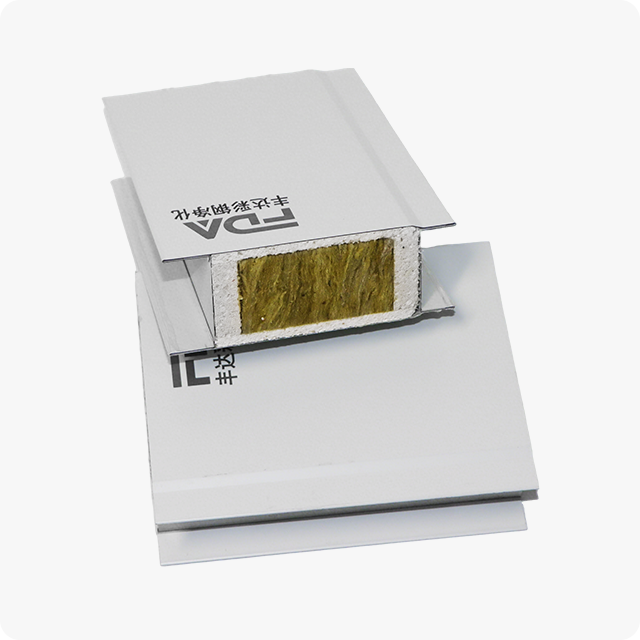
The anatomy of cleanroom panels involves several engineered layers designed for maximum durability. Galvanized steel or stainless steel facings enclose a high-density rock wool core. Specific polyurethane or epoxy adhesives bond these components together under high pressure during the manufacturing process. The steel-to-core bond prevents delamination when the room operates under severe negative or positive pressure. Modern fabrication integrates hydrophobic treatments into the rock wool fibers. This chemical enhancement improves baseline moisture resistance, preventing rapid water absorption. Basalt-derived rock wool is highly recyclable at the end of its lifecycle. It supports facility ESG goals far better than synthetic polymer cores that end up in landfills. We inspect the adhesive application during factory acceptance tests. A weak bond leads to panel bubbling months after commissioning.
The steel-to-core bond dictates the lifespan of the panel. Manufacturers apply a two-part polyurethane adhesive to the steel facing before pressing the rock wool into place. The assembly then goes through a heated press to cure the adhesive. If the factory rushes this curing process, the bond remains weak. Once installed, the negative pressure of the cleanroom pulls on the steel facing. A weak bond will fail, causing the steel to bubble outward. We call this delamination. Delaminated panels harbor bacteria in the air pockets and must be replaced immediately. Regarding sustainability, rock wool aligns perfectly with modern construction waste protocols. When a facility undergoes renovation, you can dismantle the panels, separate the steel from the core, and recycle both materials. Synthetic cores often require specialized hazardous waste disposal, adding hidden costs at the end of the facility's life.
Weight-to-strength ratios differ significantly between these two advanced materials. Aluminum honeycomb offers absolute superiority in lightweight rigidity and airborne particulate control. The hollow hexagonal cellular structure minimizes mass while maintaining exceptional structural integrity against deflection. However, rock wool generally outperforms aluminum honeycomb in fire performance and acoustic insulation. Specify aluminum honeycomb cleanroom panels for semiconductor and microelectronics facilities. In these sectors, preventing micro-vibrations, eliminating outgassing, and reducing ceiling load are primary factors. Choose rock wool for pharmaceutical applications where strict fire ratings and thermal isolation remain paramount. You cannot use aluminum honeycomb where a two-hour fire wall is required. The aluminum melts too quickly under sustained heat.
Aluminum honeycomb panels utilize an aerospace-grade core design. The hexagonal cells provide massive compressive strength while remaining mostly hollow. This makes them incredibly easy to handle on site. A single worker can carry a 3-meter honeycomb panel. That same worker cannot lift a 3-meter rock wool panel alone. However, the hollow nature of the honeycomb core means it offers almost zero acoustic dampening. Sound passes right through it. Furthermore, aluminum conducts heat rapidly. In a fire, the aluminum core transfers the heat from the hot side to the cold side in minutes, causing the cold side facing to ignite adjacent materials. You must evaluate these physical realities against your project requirements.
Load-bearing capabilities dictate ceiling panel selection for large-scale facilities. Magnesium sulfate often combines with rock wool or hollow cores to create a composite structure. This hybrid approach offers higher structural rigidity for walkable ceilings. Maintenance personnel can navigate above the cleanroom safely to service HEPA filters and ductwork. Moisture resistance is another major differentiating factor. magnesium sulfate cleanroom panels provide better performance in high-humidity washdown environments. Standard rock wool requires extensive edge sealing to survive constant wet exposure. Magnesium sulfate inherently resists water degradation. We often use magnesium sulfate for the ceiling grid and rock wool for the perimeter walls. This hybrid design maximizes both walkability and fire compartmentalization.
Magnesium sulfate, often referred to as glass magnesium board, is a dense, cementitious material. When used as a cleanroom panel core, it provides a hard, impact-resistant surface. If a forklift bumps a rock wool wall, the wall will dent deeply because the mineral wool compresses. If a forklift bumps a magnesium sulfate wall, the damage is usually superficial. This impact resistance makes magnesium sulfate ideal for high-traffic corridors. For walkable ceilings, engineers span magnesium sulfate panels across heavy-duty aluminum grids. A 50mm magnesium sulfate panel can support the point load of a technician walking across it without deflecting. Rock wool panels will snap under that same point load unless they are reinforced with internal steel channels.
A distinct upfront cost disparity exists between mineral and synthetic cores. EPS (Expanded Polystyrene) and PU (Polyurethane) are cheaper to manufacture and lighter to transport. They accelerate initial installation timelines due to their ease of handling. However, these materials possess a severe failure point that engineers cannot ignore. EPS and PU fail high-risk fire compliance tests. They melt, ignite rapidly, and release highly toxic gases under thermal stress. Facility insurers increasingly reject them for high-risk cleanroom applications. The severe life safety risks and potential for total facility loss heavily outweigh the initial capital savings. We have seen entire facilities denied occupancy permits because the contractor substituted EPS for rock wool to save money.
The construction industry used EPS and PU panels extensively in the past because they are cheap and provide excellent thermal insulation. However, the insurance industry has fundamentally changed the rules. After several catastrophic fires in food processing and pharmaceutical plants, underwriters realized that EPS and PU cores act as solid fuel. Once the steel facing is breached, the synthetic core ignites and spreads the fire hidden inside the wall cavity. Fire sprinklers cannot reach the fire inside the panel. Today, if you specify EPS panels for a high-value manufacturing facility, your insurance premiums will skyrocket, or you will be denied coverage entirely. The initial savings on material costs are instantly wiped out by insurance penalties.
Core Material Performance Comparison
Feature | Rock Wool | Aluminum Honeycomb | Magnesium Sulfate | EPS / PU |
|---|---|---|---|---|
Fire Rating | A1 Non-Combustible | A2 Limited Combustibility | A1 Non-Combustible | B/C Combustible |
Acoustic Insulation | Excellent | Poor | Good | Fair |
Weight Profile | Heavy | Very Light | Heavy | Light |
Moisture Resistance | Low (Requires Sealing) | High | Excellent | High |
Primary Application | Pharma / Biotech | Semiconductor | Washdown Zones | Low-Risk Storage |
Active Pharmaceutical Ingredient (API) processing requires strict environmental controls and hazard mitigation. High-heat sterilization zones demand robust fire compartmentalization to protect adjacent clean areas. rock wool cleanroom panels isolate volatile processes involving flammable solvents and fine powders. They prevent cross-contamination while ensuring life safety compliance across the floor plan. Biotech facilities utilize these panels to construct secure sterile boundaries around bioreactors and fermentation tanks. The thermal stability ensures that temperature-sensitive biological processes remain unaffected by ambient facility heat. We install these panels in vaccine production suites where temperature mapping must show zero deviation.
In API processing, technicians handle highly concentrated, reactive chemicals. The risk of a flash fire is always present. We design these suites as isolated fire compartments. The walls, ceiling, and doors must all carry a matching fire rating. Rock wool panels integrate seamlessly with fire-rated cleanroom doors and glazed windows to complete the compartment. In biotech, the focus shifts to sterilization. Facilities use Vaporized Hydrogen Peroxide (VHP) to sterilize the rooms between batches. VHP is highly corrosive. The steel facings of the panels must be coated with a specialized PVC or PVDF film to resist the peroxide. The rock wool core itself is unaffected by the VHP, provided the panel joints are perfectly sealed with chemical-resistant silicone.
Lithium-ion battery production involves highly reactive materials and strict moisture controls. Dry rooms and electrode mixing areas face severe thermal runaway risks. Non-combustible panels are an absolute necessity in these environments to prevent localized fires from consuming the entire plant. Chemical processing facilities deploy rock wool to separate reactive zones and storage bunkers. The A1 fire rating contains potential explosions or chemical fires within a single room. This containment protects structural steel assets, expensive processing equipment, and facility personnel. When a battery cell vents, the surrounding walls must withstand intense, immediate heat. Rock wool provides that necessary thermal shield.
The gigafactory boom has driven massive demand for rock wool panels. Lithium-ion battery production requires dry rooms with dew points as low as -70 degrees Celsius. To maintain this extreme environment, the room envelope must be perfectly sealed and highly insulated. More importantly, lithium reacts violently with water and burns at extreme temperatures. If a thermal runaway event occurs on the assembly line, the fire suppression system cannot use water. The room must contain the fire until it burns out or is smothered with specialized chemicals. Rock wool panels provide the necessary thermal barrier to prevent the fire from spreading to the rest of the gigafactory.
Rapidly assembled mobile container cleanrooms serve remote locations or temporary production surges. Modular isolation units require strict fire codes and thermal insulation to function independently of a host building. Rock wool panels deploy effectively despite the temporary or mobile footprint. They provide permanent-grade safety and structural integrity in portable formats. The high thermal resistance reduces the load on mobile HVAC units and portable chillers. This energy efficiency is required for off-grid or power-limited deployments where generator capacity is restricted. We build mobile testing labs using 50mm rock wool panels to keep the overall weight manageable while meeting fire codes.
We frequently deploy modular cleanrooms inside existing warehouses. The host building might not have the necessary fire suppression systems to support a high-risk process. By constructing the modular cleanroom with rock wool panels, we create a self-contained, fire-rated structure. This often satisfies the local building inspectors without requiring expensive upgrades to the host building's infrastructure. For mobile container cleanrooms, the panels must withstand the vibrations and torsional stress of transportation. We use high-density rock wool cores and reinforce the panel edges with steel channels to ensure the panels do not crack or delaminate while the container is on a truck.
Structural deployment realities dictate exactly how rock wool is utilized on the job site. It serves exceptionally well for internal partition walls dividing different ISO classification zones. The core density provides excellent acoustic separation between noisy mechanical rooms and quiet laboratory spaces. However, using rock wool as suspended ceiling panels introduces engineering limitations. The heavy mass requires significant reinforcement of the aluminum ceiling grid and threaded rod drops. Engineers must calculate suspension load capacities carefully to prevent ceiling collapse. Walkable ceilings often require hybrid panels to support human weight safely without deflecting. We always double up the threaded rod supports when hanging rock wool ceilings.
When building partition walls, the installation sequence dictates success. We install a heavy-gauge galvanized steel floor track first. The rock wool panels are then lifted into place and slotted into the track. Because the panels are heavy, they seat firmly into the track, creating a tight seal. We then cap the panels with a matching ceiling track. For suspended ceilings, the process is much more complex. We must install a primary grid of heavy steel C-channels suspended from the roof deck with threaded rods. We then attach the cleanroom ceiling grid to this primary structure. The rock wool panels are carefully lifted and dropped into the grid. Every suspension point must be calculated by a structural engineer to handle the dead load of the panels plus the live load of the HVAC equipment.
Despite modern hydrophobic treatments, raw rock wool remains vulnerable to water ingress. The mineral core absorbs moisture if exposed to high humidity or direct liquid contact. This absorption leads to internal sagging, a complete loss of thermal resistance, and panel deformation. It also creates a dark, damp environment for potential microbial growth behind the steel facing. Mandate hermetic edge sealing during the panel fabrication process. Utilize PVC or aluminum edge banding to protect the core from ambient moisture. Maintain strict vapor barriers during installation to ensure complete moisture control throughout the facility lifecycle. We reject any panels delivered to the site with damaged edge banding.
Water is the enemy of mineral wool. If a pipe bursts or the roof leaks, and water gets inside the panel cavity, the rock wool acts like a sponge. It absorbs the water, increasing the panel's weight exponentially. A waterlogged ceiling panel will collapse under its own weight. Furthermore, wet rock wool loses its insulating properties and takes months to dry out inside the steel facing. This creates a perfect breeding ground for mold. To prevent this, manufacturers apply a hydrophobic coating to the mineral fibers during production. This coating causes water to bead up and roll off rather than soaking in. However, you must still protect the raw edges of the panel. We use aluminum U-channels to seal the top and bottom edges of every panel before installation.
High-density rock wool is significantly heavier than EPS or aluminum honeycomb alternatives. This mass increases manual labor costs and slows down the overall installation timeline. It requires robust structural framing to support the walls, especially in high-bay cleanrooms. Specify appropriate lifting equipment, such as vacuum lifters and mechanical hoists, for the installation crew. Adjust project timelines to accommodate slower, careful handling to prevent panel damage. Verify ceiling suspension grid load capacities and structural steel anchor points before mounting any overhead panels. A standard two-man crew will struggle to lift a 3-meter rock wool panel manually. You need mechanical assists.
Let's break down the labor impact of panel weight. A standard EPS panel can be installed by a two-man crew at a rate of 50 square meters per day. Because rock wool panels are three times heavier, that same crew might only install 20 square meters per day. They have to move slower to avoid injury and prevent dropping the panels. You must factor this reduced productivity into your construction schedule. To mitigate this, we mandate the use of vacuum lifting machines. These machines use suction cups to grab the panel face, allowing a single operator to lift and position the panel effortlessly. The suction cups require a clean, smooth surface to grip, so the panels must be kept free of dust and oil on the job site.
Exposed rock wool fibers threaten the integrity of the cleanroom environment. Airborne particulates compromise ISO classifications, clog HEPA filters, and ruin sensitive microelectronics or sterile products. Flawless panel joints are non-negotiable during the assembly phase. Apply cleanroom-grade silicone caulking to seal all gaps, seams, and floor tracks perfectly. Inspect panels thoroughly before and after installation for any facing punctures. Mandate the immediate replacement of any damaged panels rather than attempting field repairs. Proper handling prevents core exposure and maintains strict environmental integrity. We use a blacklight inspection process to check every silicone seam before the room validation begins.
The core of a rock wool panel consists of millions of microscopic mineral fibers. If these fibers escape into the cleanroom, they will ruin the product and fail the ISO certification. The primary risk of fiber escape occurs during the installation process. When contractors cut the panels on site to fit around doors or HVAC ducts, they expose the raw core. We strictly prohibit cutting rock wool panels inside the cleanroom envelope. All cutting must be done in a designated fabrication tent outside the building. After cutting, the exposed edges must be immediately sealed with aluminum tape or a PVC channel. Once the panels are installed, the joints between them are the only potential escape route for fibers. We use a two-stage sealing process. First, we push a foam backer rod into the joint. Then, we fill the joint with cleanroom-grade silicone, tooling it perfectly flush with the panel face.
Consult with a licensed structural engineer to calculate the exact load-bearing requirements for your suspended ceiling grid before ordering heavy mineral cores.
Request physical Material Data Sheets (MDS) from your supplier to verify the specific core density and hydrophobic treatment levels of the panels.
Demand third-party fire testing certifications, specifically EN 13501-1 or ASTM E84 reports, to ensure the materials meet your local fire marshal's requirements.
Schedule a site walk with your installation contractor to confirm they possess the necessary vacuum lifting equipment to handle high-density panels safely.
A: Rock wool cleanroom panels typically achieve an A1 non-combustible classification under EN 13501-1 standards. The basalt mineral core does not ignite or contribute to flame spread. This rating ensures the panels provide maximum time-to-failure during a fire. It allows safe evacuation and emergency response in high-risk manufacturing facilities.
A: Rock wool panels are significantly heavier. A standard 50mm rock wool panel weighs approximately 12 to 15 kilograms per square meter. An aluminum honeycomb panel of the same thickness weighs around 6 to 8 kilograms per square meter. This weight difference requires stronger structural framing and specialized lifting equipment during installation.
A: You can use them, but with strict precautions. The core must feature hydrophobic treatments and hermetic edge sealing to prevent water absorption. If the core gets wet, it loses thermal resistance and risks microbial growth. For constant wet exposure or heavy washdown areas, magnesium sulfate panels are a safer alternative.
A: Standard rock wool panels lack the structural rigidity required for walkable ceilings and are too heavy for standard grids. They require heavily reinforced suspension framing. For walkable applications, engineers specify hybrid panels that combine rock wool with magnesium sulfate or steel reinforcement to safely support maintenance personnel.
A: The most common industry dimensions are 50mm, 75mm, and 100mm. The 50mm panels are standard for internal partition walls. The 75mm and 100mm panels are utilized for exterior-facing cleanroom envelopes or zones requiring maximum thermal insulation and extended fire resistance times.
A: Magnesium sulfate panels offer superior structural rigidity and excellent moisture resistance. This makes them ideal for walkable ceilings and washdown zones. Rock wool panels prioritize thermal stability, acoustic dampening, and high-temperature fire resistance. Magnesium sulfate handles structural loads better, while rock wool excels in environmental and acoustic isolation.


