
Views: 0 Author: Site Editor Publish Time: 2026-09-08 Origin: Site


Specifying building materials requires a strict balance between thermal efficiency, structural integrity, and rigid fire safety regulations. Choosing the right sandwich panel determines how a facility performs over decades. Specify the wrong type, and you face severe financial and operational risks. These range from failed building inspections and massive energy loss to premature structural degradation and panel delamination. We need a systematic approach to evaluate core materials, facing options, and application-specific requirements. This guide breaks down exactly how to make a technically sound procurement decision for your next project. You will learn how to match core chemistry to environmental demands, prevent common installation failures, and ensure long-term structural stability.
Core Material Dictates Performance: The internal core (e.g., PIR, Rock Wool, MGO) is the primary driver of a panel’s thermal resistance, fire rating, and structural shear strength.
Application-Specific Matching: Roofs, external facades, warehouses, and internal cleanrooms require fundamentally different panel joint designs, thicknesses (ranging from 50mm to 150mm+), and load-bearing capacities.
Advanced Composites Solve Niche Challenges: Specialized options like the Aluminum Honeycomb Sandwich Panel and MGO composites offer solutions for extreme strength-to-weight
Understanding panel performance starts with its mechanical behavior. These units function exactly like a structural I-beam. The outer metal facings act as the flanges. They handle tension and compression loads generated by wind or dead weight. The internal core acts as the web. It resists shear forces and maintains a precise distance between the facings. This composite action gives the system its immense strength-to-weight ratio, allowing lightweight walls to span multiple meters without secondary steel framing.
If the adhesive bond between the facing and the core fails, the panel loses all structural integrity. Delamination occurs rapidly. The facings buckle under minimal load, and the wall collapses under its own weight. Therefore, the manufacturing process matters just as much as the raw materials. High-quality panels use continuous lamination processes. Manufacturers inject specialized polyurethane reactive (PUR) adhesives under high pressure and heat to ensure a permanent, chemical bond between the steel and the core.
Facings typically consist of galvanized or galvalume steel. Aluminum and fiberglass-reinforced plastic (FRP) serve specific niche applications where chemical washdowns destroy standard steel. The thickness of these facings usually ranges from 0.4mm to 0.8mm. Thicker facings resist impact better and span greater distances. They also reduce the risk of aesthetic issues like oil canning on flat architectural walls. Oil canning manifests as a wavy, distorted appearance across the metal surface, usually caused by uneven stress distribution during installation or manufacturing.
The profile of the facing also contributes to structural rigidity. Deep trapezoidal ribs on roof panels drastically increase the bending moment capacity. Micro-ribbed or striated profiles on wall panels add stiffness while masking minor surface imperfections. Flat panels offer the cleanest architectural look but require the thickest steel gauges and the tightest manufacturing tolerances to remain visually acceptable.
The core defines the primary function of the wall or roof. Different chemistries and fibrous structures offer vastly different performance metrics. You must align the core properties with your facility's specific operational demands. Failing to match the core to the environment leads to rapid system failure.
Expanded Polystyrene (EPS) remains a common choice for basic insulation. It consists of expanded plastic beads fused together. EPS is lightweight and easy to cut on site. It resists moisture reasonably well and provides a baseline thermal barrier. However, EPS performs poorly in fire scenarios. It melts and shrinks away from heat, potentially contributing to flame spread. You should restrict EPS to temporary site structures, basic partitioning, or agricultural buildings where strict fire codes do not apply.
Polyurethane (PU) and Polyisocyanurate (PIR) dominate the temperature-controlled sector. These closed-cell foams offer exceptional thermal resistance, achieving high R-values per inch of thickness. PIR is an upgraded version of PU. It features a different chemical structure that chars rather than melts when exposed to flame. This carbonaceous charring effect protects the deeper layers of the foam, slowing fire penetration. PIR provides excellent insulation for cold storage, food processing, and standard industrial warehouses. It resists moisture vapor drive effectively, making it the standard for freezer applications.
Mineral wool, often called rock wool, consists of spun volcanic rock fibers bound together with thermosetting resins. It provides unmatched fire resistance. Rock wool does not burn. It acts as a physical barrier to flame spread and maintains its structural integrity at extreme temperatures. It also offers superior acoustic insulation due to its dense, fibrous nature, absorbing sound waves rather than reflecting them. The trade-off is weight and moisture sensitivity. Rock wool panels weigh significantly more than foam panels. They require heavy vacuum lifting equipment during installation. If the core absorbs water during construction or due to a joint failure, it loses its insulating properties entirely and can cause the internal steel facings to rust.
Core Material | Thermal Insulation (R-Value) | Fire Resistance | Moisture Tolerance | Primary Application |
|---|---|---|---|---|
EPS | Moderate | Low (Melts) | Good | Temporary structures, basic partitions |
PIR Foam | Excellent | Moderate (Chars) | Excellent | Cold storage, freezer walls, warehouses |
Rock Wool | Good | Exceptional (Non-combustible) | Poor | Firewalls, acoustic enclosures, data centers |
Magnesium Oxide (MGO) | Moderate | Exceptional | Excellent | Pharmaceutical cleanrooms, high-hygiene zones |
Aluminum Honeycomb | Low | High | Excellent | Semiconductor fabs, aerospace facilities |
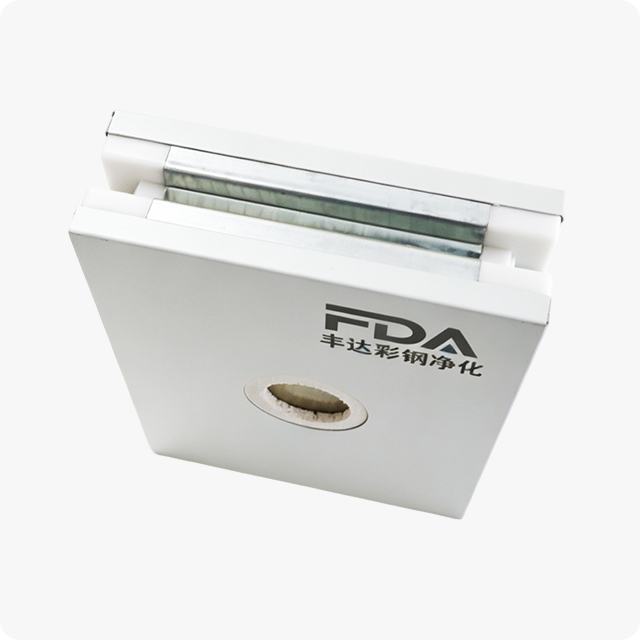
Standard cores fall short in highly regulated environments. Cleanrooms, precision manufacturing floors, and electronic component factories demand specialized composite solutions. These environments require materials that do not shed particles, resist aggressive cleaning chemicals, and maintain absolute dimensional stability under strict climate control.
Magnesium Oxide boards provide a unique solution for high-grade hygiene zones. When you specify an MGO Sandwich Panel, you gain extreme fire resistance without the massive weight penalty of thick rock wool. MGO does not support mold growth. It withstands frequent washdowns with harsh sterilizing agents like vaporized hydrogen peroxide (VHP). This makes it a primary choice for pharmaceutical production facilities where hygiene and fire safety intersect. The rigid nature of the MGO board also provides excellent impact resistance against equipment carts and pallet jacks.
For environments requiring absolute rigidity and zero outgassing, the core structure must change entirely. The Aluminum Honeycomb Sandwich Panel utilizes an internal hexagonal aluminum matrix. This geometry provides incredible compressive strength while remaining exceptionally lightweight. It does not release volatile organic compounds (VOCs). It does not trap moisture or harbor biological contaminants. Precision optical manufacturing and semiconductor fabrication plants rely on this core to maintain strict ISO cleanroom classifications. The aluminum matrix also provides a conductive path for static dissipation, protecting sensitive microelectronics from electrostatic discharge (ESD).
Sometimes, a single material cannot meet complex project specifications. Engineers combine materials to bridge performance gaps. Consider the MGO Rock Wool Composite Panel. This hybrid system encapsulates a rock wool core between thin layers of MGO board, finished with steel facings. The rock wool provides deep thermal and acoustic insulation. The MGO layers add rigid structural support and block moisture penetration into the fibers. Electronic factories utilize this composite to achieve high fire ratings while maintaining strict climate control and static dissipation. This multi-layered approach solves the inherent weaknesses of rock wool while maximizing its fire-stopping capabilities.
You cannot use the same panel profile for every part of a building. Roofs, external walls, and internal partitions face completely different environmental stressors. Matching the profile and joint design to the application prevents catastrophic failures like water ingress, thermal bridging, and structural collapse.
Roof applications demand high load-bearing capacity. Roof panels must support snow loads, wind uplift, and maintenance foot traffic. They feature deep trapezoidal ribs on the exterior facing. These ribs drastically increase the panel's bending stiffness. Roof joints usually utilize a standing seam or an overlapping corrugated design. This prevents water ingress during heavy rain and capillary action during freeze-thaw cycles. The core thickness for roofs typically ranges from 80mm to 150mm, depending on local climate data and required U-values.
External wall facades prioritize weather sealing and aesthetics. Architectural walls often use flat or micro-ribbed facings. Flat panels require thicker steel to prevent visual distortion. Wall joints typically feature a tongue-and-groove interlocking system. Many modern systems use concealed fasteners. The screws anchor the panel to the structural frame inside the joint. The next panel covers the screws. This eliminates exterior penetrations, reducing rust risks and improving the visual finish. Installers must apply continuous weather seals within these joints to stop wind-driven rain.
Internal cleanroom partitions operate under entirely different rules. Weather resistance matters less. Hygiene and flush surfaces matter most. Cleanroom panels utilize specialized aluminum extrusion joints. These joints allow the panels to sit perfectly flush with each other. Installers seal the micro-gaps with cleanroom-grade, non-outgassing silicone. The surfaces must integrate seamlessly with flush doors, windows, and return air grilles. Any ledge or gap creates a harbor for bacterial growth or particulate accumulation.
Cold storage warehouses face severe vapor drive. The temperature difference between the hot exterior and freezing interior forces moisture vapor through the walls. If vapor penetrates the panel joints, it freezes inside the core. The expanding ice destroys the panel from the inside out, causing massive delamination. Cold storage panels require complex labyrinth joints. Installers must apply continuous beads of non-hardening butyl sealant within the joint during assembly to create an absolute vapor barrier. A single gap in the butyl sealant compromises the entire freezer envelope.
Panel thickness does not just dictate insulation value. It dictates structural span capacity. The span is the distance between the steel purlins or girts supporting the panel. Longer spans reduce the amount of secondary steel required, lowering overall construction costs and speeding up erection time.
Thicker panels with dense cores span further. However, you must calculate wind loads precisely. High wind zones exert massive suction forces on the leeward side of a building. This suction attempts to rip the panels off the frame. Fastener pull-out strength often becomes the limiting factor before the panel itself breaks. You must consult manufacturer span tables. These tables specify the exact maximum span based on wind pressure, core type, facing thickness, and fastener density.
Thermal bowing presents a significant structural challenge on long wall elevations. Dark-colored exterior panels absorb intense solar radiation. The outer steel skin heats up and expands. The inner skin, exposed to the air-conditioned interior, remains cool and stable. This differential expansion causes the entire panel to bow outward. Over time, severe thermal bowing stresses the fasteners, elongates the fixing holes, and crushes the core at the support points. To mitigate this, limit panel lengths, use lighter exterior colors with high solar reflectance, or specify thicker cores that resist bending forces better. In extreme cases, engineers specify bi-metallic fasteners that accommodate slight movement without shearing.
Impact resistance is another structural consideration for ground-level panels. Forklifts and heavy machinery operate close to the walls in industrial settings. Standard 0.5mm steel facings dent easily upon impact, compromising the paint system and exposing the bare steel to rust. For high-traffic zones, specify thicker 0.7mm or 0.8mm facings, or install concrete bump walls at the base to protect the composite panels from mechanical damage.
The steel facing requires robust protection from the elements. Bare steel rusts rapidly when exposed to oxygen and moisture. Manufacturers apply a series of metallic and organic coatings to ensure longevity. The base layer is usually a zinc (galvanized) or zinc-aluminum (galvalume) alloy. This provides sacrificial corrosion protection. If the paint scratches, the zinc oxidizes first, protecting the underlying steel substrate.
The topcoat paint system dictates the panel's lifespan in harsh environments. Standard applications use Polyester (PE) coatings. PE offers decent color retention and scratch resistance for normal inland environments. It provides a cost-effective solution for standard warehouses and interior partitions where UV exposure and chemical attacks are minimal.
Industrial environments require tougher chemistry. Silicon Modified Polyester (SMP) adds silicone resin to the mix. This drastically improves resistance to chalking and fading. SMP handles higher UV exposure effectively, making it suitable for exterior walls in sunny climates. It maintains its gloss and color significantly longer than standard PE.
For coastal areas, heavy industrial zones, or highly corrosive chemical plants, Polyvinylidene Fluoride (PVDF) is mandatory. PVDF offers extreme resistance to salt spray, industrial pollutants, and intense UV radiation. It maintains its color and structural integrity for decades. While PVDF costs more initially, it prevents premature facade replacement in aggressive climates.
Cleanrooms require specialized functional coatings. Anti-static coatings dissipate electrical charges, preventing dust and micro-particles from clinging to the walls. This is critical in semiconductor manufacturing where a single dust particle ruins a microchip. Anti-bacterial coatings incorporate silver ions into the paint matrix. These ions actively inhibit microbial growth on the panel surface, supporting pharmaceutical hygiene protocols and reducing the bio-burden in the facility.
Coating Type | UV Resistance | Chemical Resistance | Best Application Environment |
|---|---|---|---|
Polyester (PE) | Moderate | Low | Interior walls, mild inland exteriors |
Silicon Modified Polyester (SMP) | High | Moderate | Standard exterior facades, sunny climates |
Polyvinylidene Fluoride (PVDF) | Exceptional | High | Coastal areas, chemical plants, heavy industry |
Anti-Static / Anti-Bacterial | Low | High (Cleaning agents) | Cleanrooms, laboratories, hospitals |
Poor installation ruins high-quality materials. Handling these large composite units requires specific protocols. Panels over six meters long require specialized vacuum lifting equipment. Using standard slings or forklifts can crush the edges, induce micro-cracks in the core, or cause the panel to snap under its own weight.
Cutting panels on site requires strict discipline. Never use abrasive blades or angle grinders. Abrasive cutting generates intense localized heat. This heat melts foam cores and destroys the protective paint coatings along the cut edge. The flying hot steel swarf embeds itself into the panel surface, causing immediate rust spots across the facade. Installers must use cold-cutting tools. Circular saws with specialized metal-cutting blades or nibblers provide clean, cool cuts without damaging the surrounding materials.
Joint sealing determines the system's weather and vapor performance. The interlocking joint alone does not stop water or air infiltration under pressure. Installers must execute a precise sealing sequence.
Verify the steel frame alignment. Uneven steel forces the panels out of plumb, making tight joints impossible.
Apply butyl tape continuously along the warm side of the joint to stop vapor drive.
Engage the tongue and groove fully using specialized clamping tools. Do not force them with hammers.
Use high-quality neutral-cure silicone on the exterior weather side to shed water.
Drive fasteners perfectly perpendicular to the panel face. Over-driving crushes the core and distorts the metal. Under-driving leaves the neoprene washer unsealed, allowing water to track down the screw thread.
Fire performance is a critical liability factor. You must differentiate between "reaction to fire" and "fire resistance." These terms mean very different things in building codes, and confusing them leads to severe compliance failures.
Reaction to fire measures how a material contributes to a growing fire. Does it ignite easily? Does it release toxic smoke? Does it produce flaming droplets? PIR cores perform well here. They char and limit flame spread, but they do not stop a fully developed fire from penetrating the wall eventually. They buy time for evacuation but do not act as a permanent barrier.
Fire resistance measures how long a wall assembly can contain a fully developed fire. It is measured in minutes (e.g., 60, 90, 120 minutes). The wall must maintain its structural load capacity, prevent flames from passing through, and keep the unexposed side cool enough to prevent secondary ignition. Rock wool and MGO cores excel here. They provide true fire compartmentalization. If a fire starts in a high-risk manufacturing zone, fire-rated rock wool walls keep it contained, allowing safe evacuation and protecting the rest of the facility from total loss.
Always demand actual test certificates from recognized laboratories like FM Global, UL, or specific EN standards. Do not accept generic marketing claims regarding fire safety. The specific panel assembly, including the joints, sealants, and fasteners, must pass the test, not just the raw core material in isolation.
Even with the right materials, site conditions cause problems. Recognizing early warning signs prevents minor issues from becoming structural failures. Delamination is the most severe failure. It usually starts at the panel ends where moisture enters the core. If you notice the steel skin bubbling or pulling away from the core, the panel is structurally compromised and requires immediate replacement.
Blistering on the paint surface indicates trapped moisture or a failure in the factory coating process. This often happens in high-humidity environments where the panel was scratched during installation, allowing moisture to creep under the paint film. Touch-up paint rarely fixes this permanently; the affected area must be sanded back to bare metal, primed, and recoated with a compatible system.
Fastener failure causes leaks and structural weakness. Inspect the neoprene washers on all exterior screws. If the washer is squeezed out flat and cracked, the installer over-drove the screw. If you can spin the washer with your fingers, the screw is under-driven. Both scenarios allow water to enter the building envelope. Installers must use screw guns with precise depth-sensing clutches to ensure consistent fastener seating.
Selecting the correct panel system ensures operational efficiency, regulatory compliance, and structural longevity. Move beyond basic insulation values and evaluate the entire composite assembly based on your facility's specific stressors. Take the following actions to secure your project:
Audit your facility's specific fire compartmentalization requirements to determine if you need reaction-to-fire or true fire-resistance cores.
Calculate your regional wind loads and consult manufacturer span tables to establish safe structural support distances and fastener densities.
Evaluate the internal vapor drive and chemical exposure to select the appropriate joint labyrinth and surface coating chemistry.
Mandate the use of cold-cutting tools and vacuum lifters in your site installation contracts to prevent material damage.
Request physical samples of the interlocking joints to verify flush tolerances and sealant application pathways before procurement.
A: External wall thickness depends on your required thermal resistance and structural span. Standard industrial walls typically use 50mm to 80mm foam cores. Cold storage or extreme climates require 100mm to 150mm. Always verify that the chosen thickness meets local energy codes and wind load span requirements.
A: Technically yes, but it is rarely recommended. Roof panels feature deep exterior ribs designed for load bearing and water shedding. Using them on walls creates aesthetic issues and complicates flashing details around windows and doors. Wall-specific panels provide better architectural finishes and simpler joint sealing.
A: Thermal bridging occurs when heat bypasses the insulation through conductive materials. High-quality panels use complex interlocking joints where the core materials meet tightly. Ensure installers do not bridge the gap with metal flashing. Apply continuous beads of insulating foam or butyl sealant within the joint labyrinth during assembly.
A: Both are closed-cell polyurethane foams, but PIR uses a different chemical formulation. PIR offers slightly better thermal resistance and significantly improved fire performance. When exposed to flame, PIR forms a protective carbon char layer, whereas standard PUR melts and burns more readily.
A: No. Aluminum honeycomb cores provide exceptional structural rigidity, extreme flatness, and zero outgassing, making them perfect for high-tech cleanrooms. However, the aluminum matrix conducts heat easily. They offer very poor thermal insulation compared to foam or mineral wool cores.
A: A properly specified and installed panel system lasts 30 to 50 years. Lifespan depends heavily on the exterior paint coating, correct joint sealing to prevent core moisture damage, and regular maintenance to address minor surface scratches before rust develops.


